
How Chlorine Can Keep Your Pool Sparkling Clean!
Updated: Feb 26

Your backyard pool is more than a place to cool off on a hot summer day. It's where your kids learn to swim, where you host weekend barbecues, and where you unwind after a long week. But none of that happens without proper maintenance. At the heart of every safe, inviting pool is a powerful chemical: chlorine.
For homeowners across Central Ohio—from Dublin to Pickerington—understanding how chlorine works isn't just helpful. It's essential. Chlorine does far more than make your water smell like summer. It kills harmful bacteria, prevents algae blooms, and breaks down the organic contaminants that cloud your water. When used correctly, it transforms your pool from a potential health hazard into a pristine paradise.
This guide walks you through everything you need to know about chlorine and pool care. You'll learn the science behind disinfection, practical maintenance steps, and how to keep your water crystal clear all season long.
Key Takeaways |
|---|
|
|
|
|
|

The Science of Clean: How Chlorine Eliminates Bacteria and Waterborne Germs
Chlorine doesn't just sit in your water looking pretty. It actively hunts down and destroys harmful microorganisms that can make swimmers sick. When chlorine dissolves in pool water, it forms hypochlorous acid (HOCl)—the active disinfectant that does the heavy lifting.
According to the CDC, when free chlorine is maintained at 1-3 ppm (parts per million) and pH stays between 7.2 and 7.8, chlorine can kill most bacteria like E. coli in less than one minute. That's faster than you can dive off the board.
But not all germs are created equal. Some take longer:
E. coli (bacterium): Less than 1 minute
Hepatitis A (virus): Approximately 16 minutes
Giardia (parasite): Approximately 45 minutes
Cryptosporidium (parasite): Approximately 10.6 days
The takeaway? Chlorine is incredibly effective against most threats, but it's not invincible. Maintaining proper levels consistently gives you the best protection.
Algae Control: Keeping Your Pool Water Crystal Clear and Slip-Free
Nothing ruins a pool faster than algae. One day your water looks perfect. The next, it's turned a murky green. Algae spores are constantly trying to colonize your pool, feeding on sunlight and nutrients. Left unchecked, they multiply rapidly, making surfaces slippery and water unsafe.
Chlorine stops algae in its tracks. It attacks the cell walls of algae, destroying them before they can spread. When your free chlorine level stays consistently above 1 ppm (or 2 ppm if you use cyanuric acid), algae don't stand a chance.
For Central Ohio pool owners, this matters especially during our hot, humid summers. Warm water and long sunny days create perfect conditions for algae blooms.
The solution? Keep your chlorine levels steady, run your circulation system 24/7 during swim season, and test your water frequently.

Oxidation Benefits: Removing Organic Contaminants and Unpleasant Odors
Here's a fact that might surprise you: that sharp "chlorine smell" at indoor pools? It's not from too much chlorine. It's from too little.
When chlorine reacts with organic matter—sweat, body oils, sunscreen, urine—it forms combined chlorine, also called chloramines. These compounds are what cause red eyes, skin irritation, and that distinctive pool smell. Combined chlorine has lost most of its disinfecting power, which means your water isn't as clean as it should be.
Chlorine's oxidizing properties break down these organic contaminants before they accumulate. Fresh chlorine in the water continuously "burns off" the waste swimmers bring in, keeping your pool clear, odor-free, and comfortable.
According to Ohio pool regulations (Ohio Administrative Code 3701-31-04), combined chlorine must stay below 1.0 ppm. If you notice a strong smell or swimmers complaining about eye irritation, test your combined chlorine immediately.
The solution? Shock your pool with a higher dose of chlorine to eliminate the buildup and restore water quality.

Proper Application: Using Tablets, Granules, and Liquid for Continuous Protection
Chlorine comes in three main forms, each with distinct advantages:
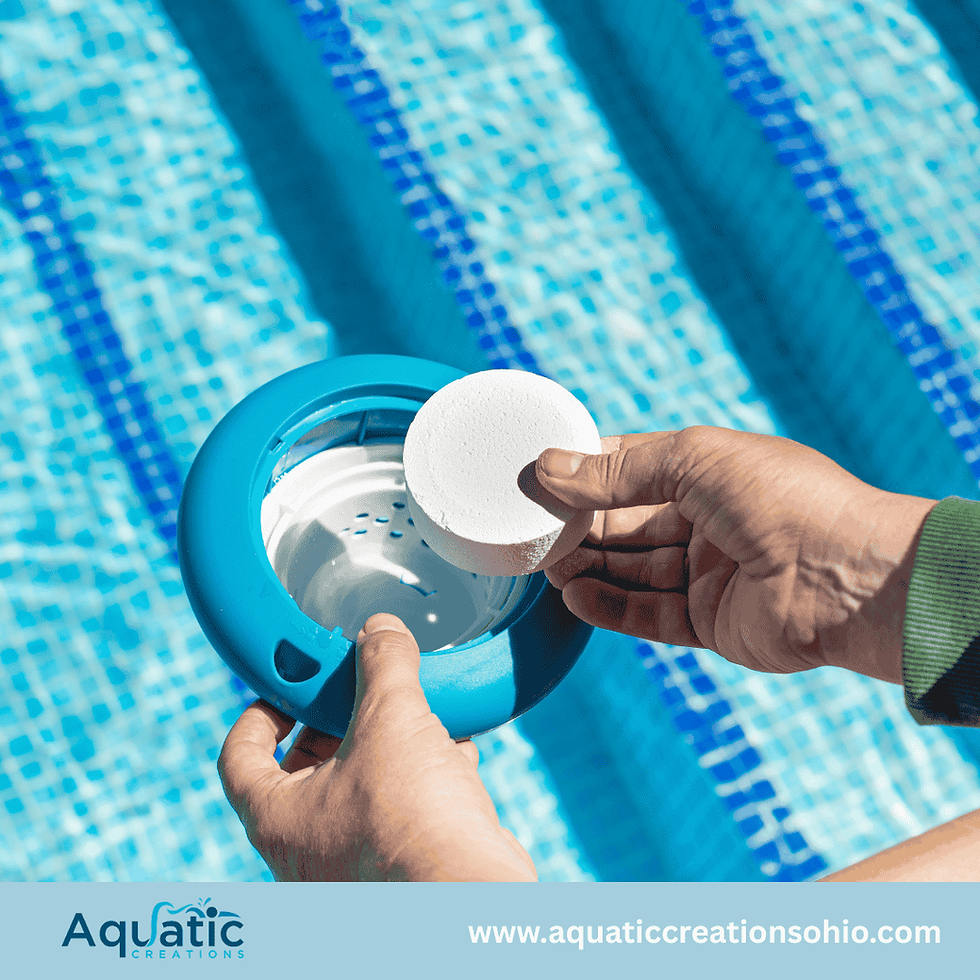
Chlorine Tablets (Trichlor)
Slow-dissolving and convenient
Ideal for automatic feeders or floating dispensers
Contains cyanuric acid (stabilizer) to protect chlorine from sunlight
Best for routine maintenance
Chlorine Granules (Dichlor or Cal-Hypo)
Dissolves quickly for immediate effect
Great for shocking or boosting chlorine levels
Can be broadcast directly into the pool
Works well for weekly maintenance doses
Liquid Chlorine (Sodium Hypochlorite)
No cyanuric acid, making it ideal for pools with high stabilizer levels
Fast-acting and easy to measure
Often used by professional pool services
Requires more frequent application but offers precise control
For continuous protection, most Central Ohio homeowners use tablets in a chlorinator or feeder system. This provides steady, automated dosing throughout the week. Add granules or liquid chlorine when you need to shock the pool after heavy use, rainstorms, or when levels drop unexpectedly.

Balancing Act: The Relationship Between Chlorine Levels and pH for Peak Efficiency
Chlorine doesn't work in isolation. Its effectiveness depends heavily on your pool's pH level. The relationship between chlorine and pH is one of the most important concepts in pool chemistry.
At a pH of 7.5, about 50% of your chlorine exists as hypochlorous acid (the germ-killer). But as pH rises to 8.0, only 20% remains in that powerful form. By pH 8.5, chlorine's killing ability drops to just 10% effectiveness.
The CDC and Ohio Department of Health both recommend maintaining pH between 7.2 and 7.8. This range balances three priorities:
Chlorine remains effective at killing germs
Pool surfaces and equipment are protected from corrosion
Swimmers enjoy comfortable water that doesn't irritate eyes or skin
If your pH drifts too low (below 7.0), chlorine becomes more aggressive—which sounds good but actually corrodes pool equipment and irritates skin. If pH climbs too high (above 7.8), chlorine loses its punch, germs survive longer, and you may see algae and cloudy water.
Test your pH every time you test chlorine (at least twice daily when the pool is in use). Use pH increaser (soda ash) to raise it or pH decreaser (muriatic acid) to lower it. Small, frequent adjustments work better than dramatic corrections.

Step-by-Step: How to Keep Your Pool Clean with Chlorine
Maintaining a healthy pool doesn't require a chemistry degree. Follow these practical steps to keep your Central Ohio pool sparkling all season:
1. Test Your Water Daily
Before anyone swims, test your free chlorine and pH. Use a DPD test kit for the most accurate results. Your targets:
Free chlorine: 1-3 ppm
pH: 7.2-7.8
Combined chlorine: Below 1.0 ppm
2. Adjust as Needed
If chlorine is low, add tablets to your feeder or broadcast granules across the pool surface. If pH is off, adjust it before adding more chlorine—remember, chlorine only works when pH is right.
3. Run Your Circulation System
Keep your pump and filter running continuously during swim season. Proper circulation distributes chlorine evenly and removes debris. Ohio regulations require continuous turnover during operation.
4. Test Again in 4 Hours
Chlorine levels can drop quickly on hot days or after heavy pool use. Test again at least every 4 hours when the pool is open. If you have an automatic chemical controller (required for spas in Ohio), you can extend this to every 12 hours, but still verify manually.
5. Shock Weekly
Once a week, give your pool a chlorine "boost" by adding 3-5 times the normal dose. This breaks down chloramines, kills stubborn algae spores, and restores water clarity. Always shock in the evening to prevent sunlight from burning off the chlorine.
6. Clean Your Pool
Brush walls, skim the surface, and vacuum the bottom weekly. Even with perfect chemistry, debris will accumulate. Removing it reduces the organic load chlorine has to oxidize.
7. Check Total Alkalinity and Cyanuric Acid Weekly
Total alkalinity (target: 60+ ppm) acts as a pH buffer. Cyanuric acid (target: 30-70 ppm) protects chlorine from UV rays. Test these weekly and adjust as needed.
Professional Care: How Aquatic Creations Ensures Your Pool Remains a Safe, High-Quality Oasis
For more than 50 years, Aquatic Creations has helped Central Ohio families enjoy beautiful, worry-free pools. Our team doesn't just build stunning custom pools—we ensure they stay pristine season after season.
When you work with us, you get:
Expert Water Chemistry Management
We handle the testing, balancing, and adjusting so you don't have to. Our technicians understand the unique challenges of Ohio water and weather, from spring startups to fall closings.
Quality Equipment Installation
Proper chlorination starts with the right equipment. We install reliable chemical feeders, automatic controllers, and circulation systems designed for continuous protection.
Proactive Maintenance Plans
We catch small problems before they become expensive repairs. Regular visits keep your chlorine levels steady, your equipment running smoothly, and your water sparkling.
Education and Support
We believe informed pool owners are happy pool owners. Our team teaches you the fundamentals of pool care and remains available whenever questions arise.
Whether you're planning a new fiberglass pool, a compact plunge pool for a smaller yard, or need ongoing maintenance for your existing pool, Aquatic Creations delivers the expertise and attention to detail that comes from five decades in the business.

Frequently Asked Questions
Q: How often should I add chlorine to my pool?
A: It depends on your system. Automatic feeders and tablets provide continuous dosing, requiring refills every 1-2 weeks. Manual additions with granules or liquid might be needed 2-3 times per week. Test frequently and adjust based on results.
Q: Why does my pool smell strongly of chlorine?
A: That smell indicates combined chlorine (chloramines), not excess chlorine. Shock your pool to break down these compounds and restore proper chlorine levels.
Q: Can I swim right after adding chlorine?
A: Wait until chlorine levels drop below 5 ppm and ideally return to the 1-3 ppm range. This usually takes 2-4 hours after adding granules and up to 8-24 hours after shocking.
Q: What's the difference between free chlorine and total chlorine?
A: Free chlorine is the active disinfectant. Total chlorine includes both free and combined chlorine. The difference between the two is your combined chlorine level, which should stay below 1.0 ppm.
Q: Does rain affect my chlorine levels?
A: Yes. Heavy rain dilutes chlorine, lowers pH, and introduces contaminants. Always test and adjust chemistry after significant rainfall.
Q: How do I know if I'm using too much stabilizer?
A: If cyanuric acid exceeds 70 ppm, chlorine effectiveness drops significantly. The only fix is partially draining and refilling your pool with fresh water.
Ready to Dive Into Your Dream Pool?
Proper chlorine maintenance keeps your pool safe, beautiful, and ready for endless summer fun. But great pool care starts with great pool design.
Aquatic Creations has spent more than 50 years designing and building custom pools across Central Ohio. From sprawling family pools in Dublin to compact plunge pools in Columbus, we create backyard paradises built to last. Every pool we construct comes with the water chemistry knowledge and ongoing support you need to keep it pristine.
Ready to transform your backyard? Contact Aquatic Creations today for a free consultation. Let's design your dream pool and ensure it stays sparkling clean for decades to come.


Comments